Carbon steel sheet is one of the most widely used basic materials in modern industry. Its material grade classification directly determines its strength, toughness, processing performance, and suitability for various applications. From engineering design and material selection to manufacturing, grade standards are the core basis for ensuring performance and safety.
Different countries and regions have developed carbon steel plate grading systems based on carbon content and mechanical properties (such as yield strength, tensile strength, and impact toughness). The following is an overview of the main international carbon steel plate grading standards.
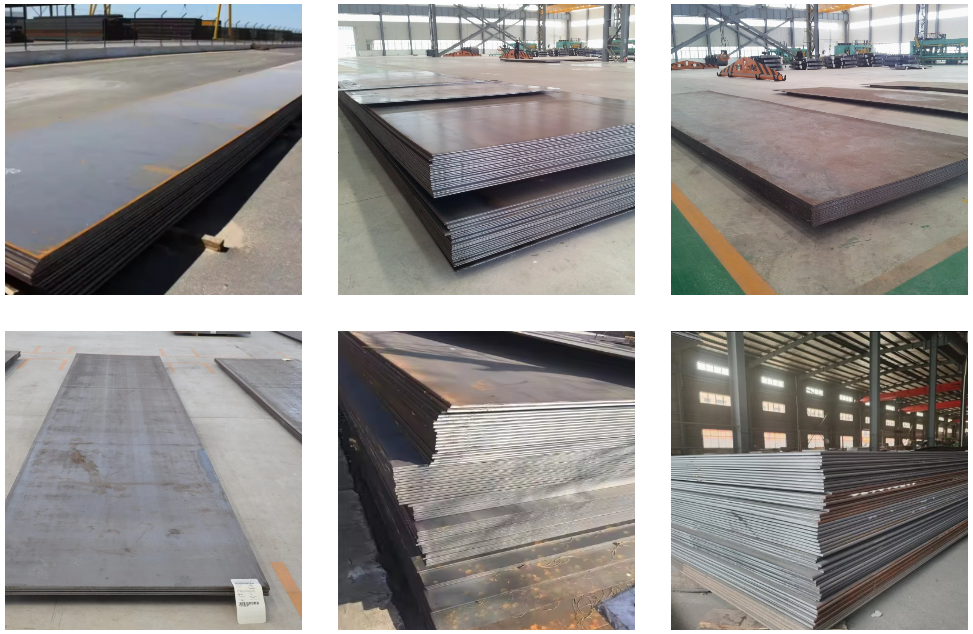 European Standards (EN): Focus on Structural Safety
 European steel grades are primarily defined according to the EN 10025 series of standards, which covers carbon steel and fine-grained structural steel. Steel grades are classified according to yield strength and impact toughness.
S235JR / J0 / J2: Low carbon steel (C≈0.17%), yield strength ≥235 MPa
JR: Room temperature impact strength (20°C, ≥27J), suitable for general structures such as factory supports and purlins.
J0: 0°C impact strength (≥27J), suitable for mildly cold environments.
J2: -20°C impact strength (≥27J), suitable for structural frames in cold regions such as northern regions.
S275JR / J0 / J2 / K2: Medium-low carbon steel, yield strength ≥275 MPa. Higher strength than S235, suitable for medium-load structures such as bridge beams and equipment bases. K2 grade steel has excellent low-temperature performance (tested for use at -40°C).
S355JR / J0 / J2 / K2: Medium carbon steel (C≈0.20%), yield strength ≥355 MPa. Combining high strength and high toughness, it is ideal for heavy-duty applications such as industrial columns, crane beams, and marine structures. K2 grade steel maintains impact toughness at temperatures as low as -40°C.
American Standard (ASTM): Classified by Application AreaASTM A36: The most commonly used low-carbon structural steel (carbon content ≤0.25%), yield strength ≥250 MPa, tensile strength 400–550 MPa. It has no specific impact toughness requirements, therefore it is suitable for general building and mechanical components (e.g., platforms, supports). It is known for its excellent weldability and global availability.
ASTM A572 (Grades 50/60/65): High-strength low-alloy steel containing trace amounts of manganese and vanadium.
A572 Grade 50 (Yield Strength ≥345 MPa, Tensile Strength ≥450 MPa) is widely used in bridges, pressure vessels, and vehicle frames. It offers better weather resistance and higher strength than A36.
ASTM A105: Forging carbon steel (also commonly used for thick plates). With C ≤0.35% and a yield strength ≥275 MPa, it is ideal for pressure piping, flanges, valve bodies, and other pressure-bearing components.
Key factors in selecting carbon steel plate grade
Load Capacity Requirements:
Light Load: Q195 / Q215 (e.g., fences, panels)
Medium Load: Q235 / S235 (e.g., building framing)
Heavy Load: Q275 / S355 / ASTM A572 Gr.50 (e.g., bridges, cranes)
Ambient Temperature:
Room Temperature: JR / Class A
Around 0°C: J0 / Class B
Below -20°C: J2 / Class D / S355K2
Processing requirements:
Welded structures: Low carbon steel (e.g., Q235, 20#).
Cutting, machining, or heat treatment: Medium carbon steel (e.g., 45#).
In Conclusion
Selecting the appropriate carbon steel grade ensures a balance between strength, toughness, and cost-effectiveness. Whether following EN or ASTM standards, correct grade selection directly impacts structural performance, safety, and long-term reliability in industries such as construction, shipbuilding, energy, and machinery manufacturing.


