This blog will introduce porous stainless steel discs, exploring their engineering structure, powder metallurgy manufacturing process, and wide range of applications from industrial filtration to medical devices. Learn how their toughness, heat resistance, and customizable pore size enhance performance in high-risk environments.
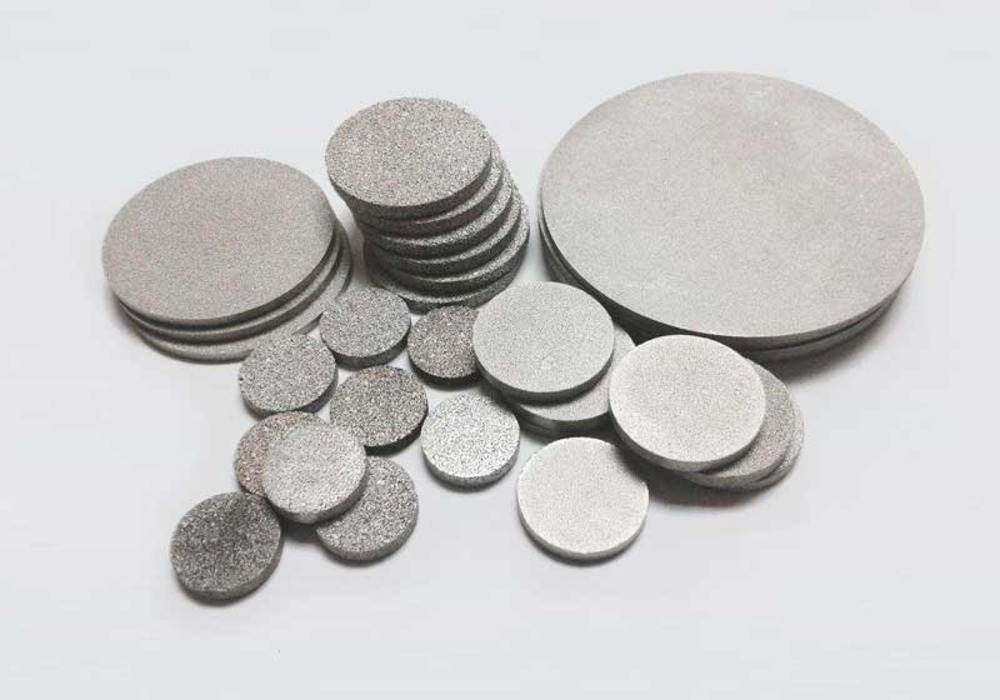
This blog will introduce porous stainless steel discs, exploring their engineering structure, powder metallurgy manufacturing process, and wide range of applications from industrial filtration to medical devices. Learn how their toughness, heat resistance, and customizable pore size enhance performance in high-risk environments.
Read about key selection considerations and maintenance information that help improve system efficiency and durability. Understand why they are crucial for accuracy and reliability in aerospace or environmental monitoring.
What is a porous stainless steel disc?
Types and Characteristics
Porous stainless steel discs are manufactured using powder metallurgy processes, resulting in a unique metallic structure. These discs typically have a porosity of 30% to 50%, with pore sizes adjustable from 0.1 µm to 100 µm.
Key characteristics include: high mechanical strength; corrosion resistance; thermal stability up to 800°C; and sufficient permeability to regulate fluid flow and maintain filtration efficiency under extreme conditions.
Common Materials
316L stainless steel is the preferred choice due to its excellent corrosion resistance in acidic and chloride environments. Other grades, such as 304 and 310, are selected based on temperature and chemical requirements. For extreme applications such as gas turbine components, alloys such as Inconel® or Hastelloy® are used to withstand temperatures exceeding 1000°C.
Manufacturing Process
This material is produced using powder metallurgy: stainless steel particles are compacted under high pressure (up to 1000 MPa) and sintered in a controlled atmosphere at 1200-1300°C. Advanced technologies such as cold isostatic pressing (CIP) ensure a uniform porosity distribution.
After sintering, polishing or special coatings are applied to achieve specific surface finishes and chemical compatibility.
Porous Stainless Steel Discs
Advantages of Porous Stainless Steel Discs
Porous stainless steel discs are designed for extreme conditions, such as temperatures up to 600°C and pressures exceeding 1000 psi. This design allows for sintering, preventing deformation under stress and ensuring long-term reliable performance.
Industries such as chemical, oil, and gas rely on these discs to ensure stable operation of equipment for many years, reducing maintenance costs and downtime.
Durability and Service Life
These discs exhibit exceptional corrosion resistance, resisting corrosive environments such as acids, alkalis, and chlorides. Even after immersion in salt solutions with concentrations up to 20% for 5000 hours, material loss is minimal. Their non-reactive surface inhibits bacterial growth and particulate buildup, making them widely used in pharmaceutical sterilization systems and food-grade filtration applications where high purity is required.
Wide Range of Applications and Versatile Uses
From aerospace fuel filtration to biomedical implants, porous stainless steel discs meet a wide range of functional requirements. These disks have configurable pore sizes (0.5µm to 100µm) and permeability, allowing for precise control of physical processes such as gas diffusion, liquid dispersion, and sound attenuation.
When applied to automotive emission systems, these disks can achieve a particulate matter capture efficiency of 99.9% with optimized airflow.
Applications of Porous Stainless Steel Discs
Industrial Filtration
They are used in chemical processing to filter corrosive liquids, in the oil and gas industry to remove particulate matter, and in beverage and food production to maintain product purity. Their uniform pore structure enables high-precision filtration and helps reduce downtime and maintenance costs during continuous operation.
Medical Devices
In medical applications, these filter discs are critical components of equipment requiring sterile filtration, such as ventilators, dialysis machines, and drug delivery systems. These materials are biocompatible, can withstand repeated sterilization cycles, and are ideal for filtering pathogens, aerosols, and contaminants while maintaining efficient airflow in life-saving equipment.
Automotive Applications
Automotive systems use porous stainless steel filter discs for fuel filtration, emission control, and sensor protection. They help prevent contaminants from entering fuel injectors, improve catalytic converter efficiency, and protect sensors from particulate matter in the exhaust system. They can withstand extreme temperatures and pressures, ensuring reliable operation in internal combustion engines and modern electric vehicles.
Environmental Monitoring
Environmental monitoring equipment utilizes these filters to analyze air and water quality. These filters, used as filters in sensors, detect pollutants, particulate matter, and gases, enabling accurate sampling in outdoor and industrial environments. These filters are corrosion-resistant, durable, and maintain stable performance even in harsh climatic conditions ranging from marine environments to high-humidity regions.
Choosing the Right Porous Stainless Steel Disc
Factors to Consider
Choosing the right porous stainless steel disc depends on specific operating requirements. Key factors include pore size (affecting flow rate and filtration efficiency), thickness (ensuring structural integrity), and permeability (ensuring optimal performance under pressure).
Generally, corrosion resistance is crucial in harsh environments, while other properties such as heat resistance help maintain stability in high-temperature applications. Material properties must be compatible with the chemicals or gases in the system, as chemical corrosion can degrade material properties.
Comparison of Different Grades of Stainless Steel
Different grades of stainless steel, such as 304, 316, and 316L, each have their unique advantages. 304 grade stainless steel offers broad corrosion resistance and is cost-effective, making it suitable for applications in mild environments.
316 grade stainless steel contains additional molybdenum, making it suitable for chloride-rich environments; while 316L grade stainless steel has a lower carbon content, making it suitable for welding applications. For example, higher-grade alloys such as 904L perform excellently in extremely acidic or high-salt environments, but are also more expensive.
This helps ensure that the performance provided meets operational requirements such as mobility, harsh environments, and health, safety, and environmental risks, and this long lifespan ultimately improves cost-effectiveness throughout the entire process and system lifecycle.
Consulting Suppliers: Working with experienced suppliers can streamline the selection process. Reputable suppliers will provide support in determining material specifications, custom processing, and testing procedures. They typically offer porosity certification, material traceability, and performance data.
On the other hand, to ensure high confidence in the disk performance of a particular system, it is sufficient for the supplier to provide a few successful real-world simulations or prototype tests—ideally, if they comply with industry-recognized standards (such as ASTM, ISO, etc.).


